Bedding & Materials
What to Know About the Obasan Deluxe Wool and Latex Mattress Topper
A mattress topper is a modest object with an unusually consequential assignment: to change the way a bed feels without changing the bed itself. In a wool-and-latex design, the two materials bring different temperaments to the task—one soft and moisture-managing, the other springy and supportive. Knowing what each can, and cannot, do makes it easier to judge whether this kind of layer belongs on your mattress.
Published October 19, 2026
A small change with a particular purpose
Mattress toppers occupy an interesting territory between comfort accessory and practical adjustment. They are not quite a new mattress, though shoppers sometimes approach them with the hopes they would bring to one. Nor are they merely a protective pad. A topper is meant to alter the surface: to add cushioning, soften a bed that feels too firm, or introduce a different combination of support and temperature management.
The Obasan Deluxe Wool and Latex Mattress Topper is a name that suggests a blend of two natural materials. Wool and latex are often paired because they answer different questions. Wool is associated with softness, insulation, and the management of moisture. Latex, depending on its formulation and construction, is known for responsive cushioning: it compresses under weight and tends to recover its shape rather than remaining deeply indented. Together, they can offer a surface that feels more layered than either material alone.
That description is a starting point, not a substitute for the product’s current specifications. A model name does not, by itself, establish the exact composition, thickness, firmness, cover, certifications, or care instructions of a particular version. Before making a decision, consult the maker’s current product details and confirm the construction for the size and model you are considering. Those particulars are what turn a general idea—wool plus latex—into a useful expectation about how the topper might behave on your bed.
The central question is not whether wool or latex is universally superior. It is whether their combined qualities address a real mismatch between your mattress and your preferences. A topper can refine a sleep surface. It cannot reliably repair a worn-out mattress, correct every source of discomfort, or make an unsuitable bed suitable for every sleeper.
What wool brings to a sleep surface
Wool has a long history in bedding, clothing, and other materials used close to the body. Its appeal lies partly in the way it manages warmth and moisture. Wool fibers can absorb water vapor while still feeling relatively dry against the skin, a quality that may help a bedding layer feel less clammy than one that traps perspiration at the surface. It is also an insulator, which means it can help retain warmth when conditions call for it. In bedding, these properties are commonly described as temperature regulation.
That phrase can sound more dramatic than the effect is. Wool does not set the room temperature, cool a sleeper in the manner of an active device, or guarantee that someone who tends to sleep hot will no longer do so. Rather, it contributes to the local environment at the surface of the bed. The result depends on the amount and arrangement of wool, the cover fabric, the layers beneath it, the sheets above it, the room’s climate, and the sleeper’s own habits and physiology.
Wool can also lend a bed a cushioned, gently yielding feel. How much cushioning it provides depends on its quantity and how it is quilted or otherwise contained. A wool layer may settle and compress with use; that behavior is not necessarily a defect, but it is a reason to read construction and care information closely. “Wool topper” can describe products with different lofts and different degrees of plushness, so the material name alone cannot tell you how soft the finished surface will feel.
People sometimes select wool because they value natural fibers or want to explore alternatives to synthetic fills. Such preferences can be part of an informed choice, but they should not be confused with a guarantee of allergy relief or a medical benefit. Anyone with a known sensitivity should review the full material information—including the cover and any treatments—and consult a qualified health professional when appropriate.
What latex contributes
Latex is valued in mattresses and toppers for a different set of reasons. It is resilient: when compressed, it generally pushes back, creating a buoyant sensation that differs from the slower, more enveloping response associated with some memory foams. That response can make movement across the surface feel relatively easy. For some sleepers, the distinction is obvious; for others, it is a matter of preference that becomes clear only after trying a similar material.
In a topper, latex may provide the main cushioning structure or work as one component in a layered design. Its feel is shaped by its thickness, density, firmness, processing, and the way it is cut or arranged. A thin latex layer over a firm mattress may have a subtler effect than a deeper layer. A plush wool layer above it may soften the initial feel, while the latex beneath supplies more resilient support. These are reasonable ways to think about the partnership, but the precise sensation depends on the actual build.
Latex is not one single feel. It can range from relatively gentle to quite firm, and the support a sleeper experiences depends not only on the material but also on body shape, sleeping position, mattress underneath, and how the layers interact. A topper that feels comfortably buoyant to one person may seem too springy or too firm to another. Reading measurements and material descriptions helps narrow the possibilities; a return policy or an opportunity to try the product can be equally important.
There are also practical considerations. Latex products may be heavier and less easy to reposition than thin mattress pads, depending on their size and construction. People with a latex allergy should take particular care: product details should be reviewed with the manufacturer, and questions about exposure or suitability should be discussed with a clinician. A broad material label is not enough to answer an individual medical question.
Why combine wool and latex?
The combination is appealing in theory because it joins a material often chosen for surface softness and moisture management with one commonly chosen for resilient support. A layered topper may feel inviting at first contact while still resisting the sensation of sinking deeply into the mattress. Wool can soften the transition at the surface; latex can contribute a more responsive foundation. The arrangement can be useful for someone who wants a bed to feel more cushioned without seeking the slow, deeply conforming character of some foam layers.
But “complementary” does not mean that every wool-and-latex topper will perform in the same way. One model might place wool in a quilted cover over a latex core; another could use a different sequence or proportion. The name Obasan Deluxe Wool and Latex Mattress Topper points toward a material pairing, but shoppers should verify the current construction rather than infer a layer diagram from the title. If the seller or manufacturer provides details on wool weight, latex type, total height, cover fabric, firmness, or fastening method, those are more informative than a general description.
It is useful to imagine the topper as an adjustment with limits. If the mattress is slightly firmer than you prefer, the added cushioning may make it feel more accommodating. If the mattress is already soft, a plush topper could make the overall surface feel too yielding. If the mattress has a deep sag or a damaged support core, a topper may follow that unevenness rather than correct it. In that situation, the more fundamental issue is the mattress itself.
Start with the mattress you already own
Before choosing any organic mattress topper, spend a little time describing the current bed in concrete terms. Does it feel too firm at the shoulders or hips? Does it feel supportive when you first lie down but uncomfortable later? Is the surface merely a little flat, or is there a visible depression? Does the mattress move or creak? A topper is most useful when the problem is clearly at the surface and the mattress beneath it remains in sound condition.
Consider your usual sleep position, but resist treating it as a rulebook. Side sleepers often pay close attention to cushioning around the shoulder and hip. Back sleepers may be more sensitive to how the pelvis and lower back settle. Stomach sleepers may prefer a less yielding surface. These are useful starting points rather than universal prescriptions: body proportions, comfort preferences, and the mattress’s own construction all affect the result.
Think, too, about how much change you actually want. Someone seeking a subtle softening may not want a tall, plush layer. Someone hoping to make a notably firm bed more forgiving may need to look carefully at the topper’s thickness and composition. A product description that says “cushioning” does not specify how much cushioning you will feel. Where possible, compare dimensions and construction details with a topper whose feel you already know.
Finally, measure the mattress. Its length, width, and depth affect fit, as does the way the topper is held in place. Check whether it has straps, a fitted skirt, or another fastening method, and whether those features can accommodate your mattress. Add the topper’s height to the existing mattress height when checking fitted sheets and bed linens. A good material pairing can still be frustrating if it shifts during the night or leaves the sheets too tight.
Care is part of the decision
Natural materials are often praised for their character and feel; they are not automatically carefree. Wool and latex can have different cleaning and handling needs, and the topper’s complete construction matters. A cover may be removable or fixed. The wool may require airing, spot cleaning, professional care, or another method specified by the maker. Latex may have separate instructions, particularly if the cover is removed. Do not assume that a product can be machine washed simply because a mattress pad can be.
Before purchase, find the manufacturer’s care instructions and read them in full. Ask whether the cover can be removed, what to do after a spill, whether the topper should be rotated, and whether it must be protected from prolonged moisture or direct sunlight. If the care guidance is unclear, ask the seller or manufacturer to clarify it. A clear answer is especially valuable for an item designed to remain on a bed night after night.
A breathable mattress protector or pad may help shield the topper from perspiration and everyday accidents, but it can also alter the feel of the surface. A thick or impermeable layer may change the way air and moisture move through the bedding. Compatibility is therefore about more than the mattress dimensions: the protector, sheets, topper, and mattress together form a small bedding system. When testing a new layer, change one thing at a time where possible, so that you can tell what is making a difference.
Questions worth asking before you buy
The most useful product research is often specific and slightly unglamorous. A well-written description should help you understand not only what a topper is made from, but what it is likely to ask of you once it arrives. For the Obasan Deluxe model, confirm the current specifications directly with the manufacturer or authorized seller. In particular, look for answers to questions such as:
- What is the exact construction, and where are the wool and latex positioned?
- What are the topper’s total height and available mattress sizes?
- What kind of latex is used, and is the firmness or feel described?
- What cover materials are used, and can the cover be removed?
- How should the topper be cleaned, aired, stored, or rotated?
- Does it have straps or another method for keeping it in place?
- What is the trial, exchange, return, or warranty policy?
- Are there material certifications, and what products or components do they cover?
Certifications can be useful, but their meaning depends on the scope of the certification and the exact component covered. A claim about one material should not automatically be read as a claim about every part of the finished topper. If a label matters to your decision, verify the standard and the certified item rather than relying on a broad phrase such as “natural” or “organic.” Clear documentation is more useful than an appealing adjective.
How it compares with other approaches
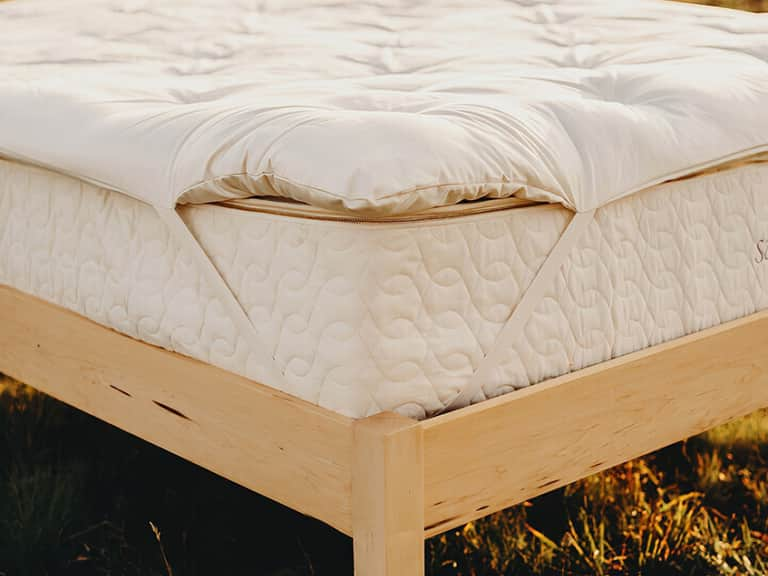
A wool-and-latex topper is only one way to change a mattress’s surface. A wool-only topper may emphasize loft and the familiar warmth-and-moisture qualities of wool without adding a latex layer. For example, the Savvy Rest Natural Savvy Woolsy Mattress Topper is described as a wool-filled topper in an organic cotton cover, with corner straps and care guidance supplied by the maker. It offers a useful point of comparison for readers interested in wool, though its construction should not be treated as a proxy for the feel or specifications of an Obasan product.
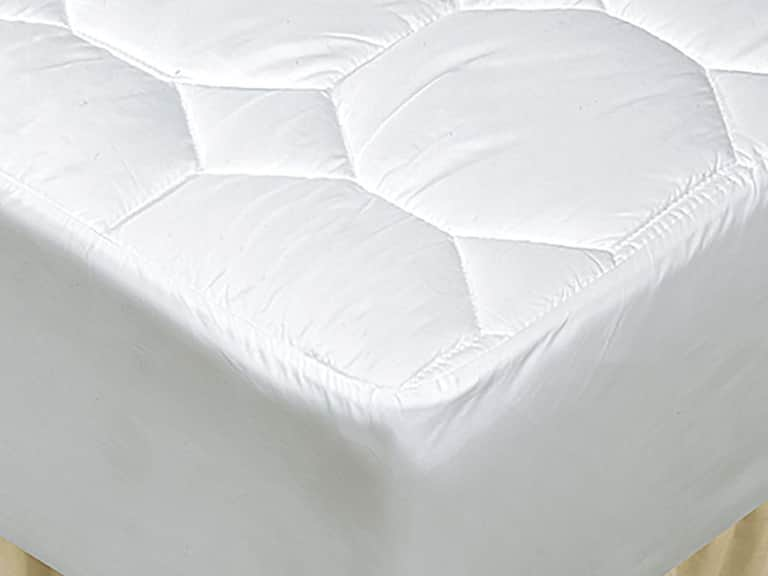
Other toppers use cotton, down or down-alternative fill, or foam. Each construction makes a different compromise among cushioning, resilience, warmth, weight, maintenance, and price. A cotton mattress pad, for instance, is generally a different kind of purchase from a thicker comfort-altering topper; a thin protective pad should not be expected to transform a mattress. Foam designs may provide a more enveloping or cradling sensation, while latex often feels more buoyant. Those broad descriptions are not guarantees, but they can help organize a search.
There is no prize for selecting the most elaborate arrangement. The better choice is the one that addresses the bed’s actual shortcoming and fits the household’s care habits. A simpler layer that is easy to maintain may be more satisfying than a sophisticated construction that demands attention the owner does not want to give it.
A measured way to decide
In assessing the Obasan Deluxe Wool and Latex Mattress Topper, separate what the materials generally suggest from what the particular model demonstrably provides. Wool may contribute moisture management, insulation, and soft loft. Latex may contribute resilient cushioning. Together, they suggest a layered approach to comfort. The model’s real-world character, however, depends on its specific construction, and those details should be confirmed before purchase.
It may be a promising direction if you want a natural-material layer that adds cushioning while retaining a responsive feel, and if your mattress is in good condition but slightly too firm or plain at the surface. It may be less suitable if you need a very pronounced plush effect, want a deeply contouring feel, have a mattress with structural wear, or require a low-maintenance layer that can be routinely machine washed. Those are not judgments about the product’s quality; they are questions of fit.
When possible, make the decision in stages: establish what feels wrong about the current bed, confirm the topper’s dimensions and construction, read the care requirements, and understand the return terms. A mattress topper is not a grand renovation. It is closer to adjusting the lighting in a room: a modest intervention whose success depends on noticing what was bothering you in the first place.
In the end, wool and latex are not a promise of perfect sleep. They are materials with distinct and potentially compatible qualities. A careful choice begins with that modest understanding—and with the useful recognition that the best layer is not the one with the most persuasive name, but the one that makes a particular bed feel more right.